Baking recipe · from the recipe book
Sharp Cheddar Seeded Rye Sourdough Batard
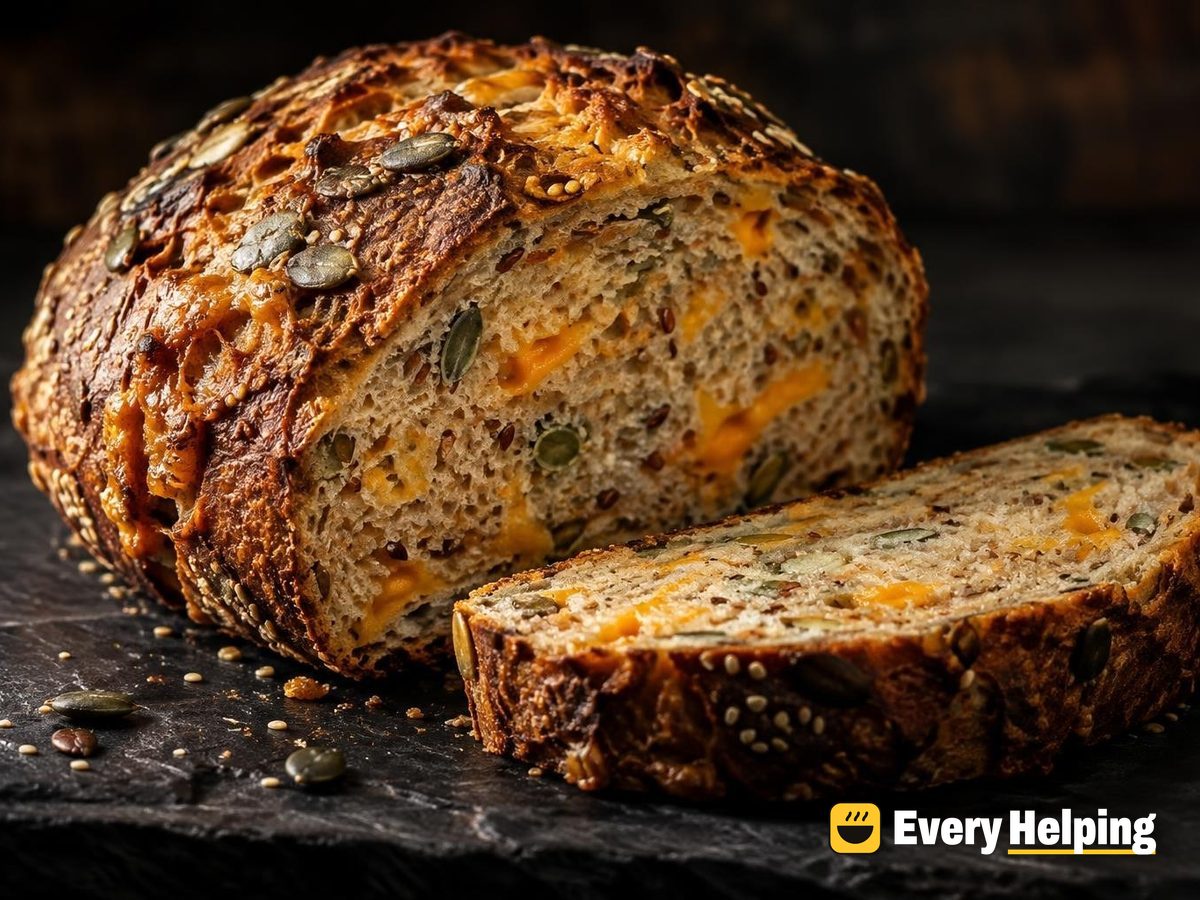
A tangy, hearty rye batard studded with pockets of melted sharp cheddar and nutty seeds, with a crackling, blistered crust and a moist, tight crumb that slices neatly for sandwiches.
- Dutch oven
- 1 day 4 hr · 55 min hands-on
- Makes 1 loaf (12 slices)
- Vegetarian
- 31–45 g carbs
- Sodium 600 mg or less
- Sat fat 4 g or less
- 500 calories or less
Ingredients
- 3 cups300 gRye flour, medium
- 1½ cups200 gBread flour
- 1½ cups370 gWaterlukewarm, about 80°F (27°C)
- 4 oz120 gActive sourdough starter (100% hydration)at its peak
- 1¾ tsp10 gSalt
- 1⅓ cups shredded150 gCheddar cheesesharp, cut into 1/2-inch cubes and chilled
- ¼ cup35 gPumpkin seeds (pepitas)lightly toasted and cooled
- 3½ tbsp30 gSesame seedsdivided
- 3 tbsp20 gGround flaxseed
Steps
- Day 1, morning: feed your sourdough starter from your own starter supply (separate from this recipe's ingredients), in equal weights as you usually do, and leave it at about 75°F (24°C). It peaks in 4 to 6 hours, when it has doubled, is domed and full of bubbles.
- While the starter rises, cut the cheddar into cubes and chill it, and toast the pumpkin seeds in a dry skillet over medium heat for 3 to 4 minutes until they puff; cool them. Set aside half the sesame seeds for the crust.
- When the starter peaks, stir the sourdough starter into the water in a large bowl until milky, then add the rye flour and bread flour and mix with a wet hand or spatula until no dry patches remain. Cover and rest 30 minutes.
- Sprinkle the salt over the dough and squeeze it in with a wet hand for 2 to 3 minutes. This dough is about 74% hydration and 2% salt by bakers' percentages, plus the water in the starter; rye dough feels sticky and paste-like, which is normal.
- Bulk rise at about 75°F (24°C) for 4 to 5 hours, covered. After the first 30 minutes, do the first stretch-and-fold with wet hands, scattering the cheddar, pumpkin seeds, flaxseed and the first half of the sesame seeds over the dough as you fold so they are spread through it.
- Give two more sets of stretch-and-folds, 30 minutes apart, then leave the dough alone for the rest of the bulk. It is ready when it has grown by about half, looks puffy and shows bubbles at the sides.
- Turn the dough onto a lightly wet counter and, with wet hands, pat it into a rectangle and roll it up tightly into a batard, pinching the seam closed. Brush the top with a little water and roll it in the remaining half of the sesame seeds.
- Line a banneton or bowl with parchment, place the batard in it seam side down, cover and cold proof in the fridge for 12 to 16 hours overnight, until it has risen slightly and springs back slowly when poked.
- Day 2: put a Dutch oven with its lid in the oven and preheat to 475°F (245°C) for 45 minutes.
- Lift the cold dough out on its parchment and make one long slash along the top. Lower it into the hot Dutch oven, cover and bake 20 minutes.
- Remove the lid, lower the oven to 450°F (230°C) and bake 25 to 30 minutes more, until the crust is deep brown and crisp and the center reads 200–205°F (93–96°C); any cheese that oozes out will turn into crisp, lacy edges.
- Cool the loaf on a rack for at least 3 hours before slicing, as rye keeps setting as it cools. Cut into 12 slices.
Food safety: Don't taste raw dough or batter: raw flour and raw eggs can carry germs.
Contains: Milk, Gluten, Sesame.
Cook mode Log it in Today Make it mine
Made it
Made it? Share how yours turned out.
You might also like
 Cheddar Walnut Rosemary Seeded Sourdough Boule260 calories · 9 g protein
 Honeyed Oat Porridge Seeded Whole Wheat Boule240 calories · 9 g protein
 Maple Milk Oat-Crusted Seeded Sourdough Boule230 calories · 7 g protein
 Oat Porridge Rosemary Spelt Sourdough Boule230 calories · 9 g protein
Saved in the Every Helping recipe book on October 24, 2026.
Want one that fits your numbers?
Pick the meal, the pan and your targets, and the Every Helping recipe generator writes a recipe with every number worked out. Free on the web.