Baking recipe · from the recipe book
Honey Pepper Feta Walnut Rye Boule
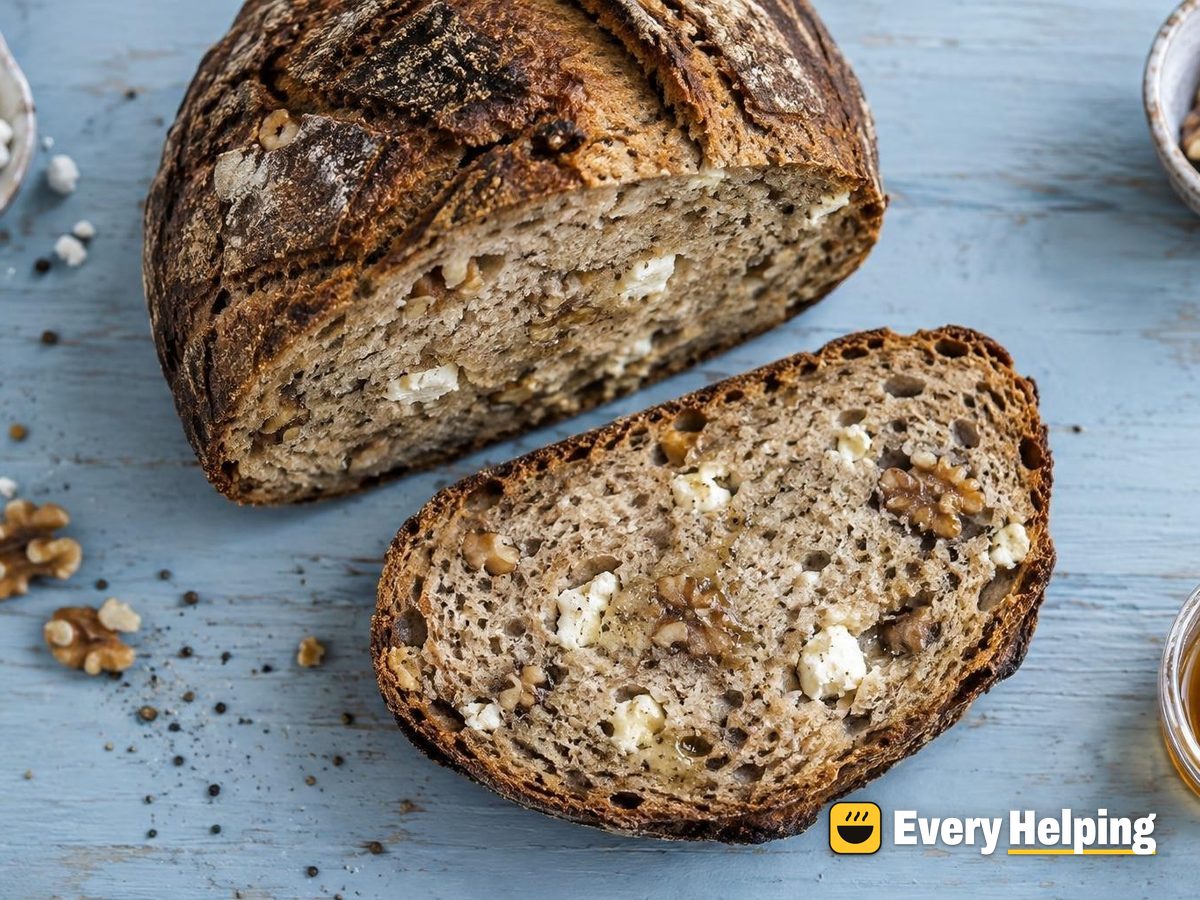
A dark, crackly-crusted rye boule with a moist, tangy crumb studded with salty pockets of feta, toasty walnuts, a hint of honey and a peppery bite.
- Dutch oven
- 1 day 3 hr · 50 min hands-on
- Makes 1 loaf (12 slices)
- Vegetarian
- 31–45 g carbs
- Sodium 600 mg or less
- Sat fat 4 g or less
- 500 calories or less
Ingredients
- 3¼ cups330 gRye flour, mediumdivided: 320 g for the dough, 10 g for dusting
- 1¼ cups170 gBread flour
- 1½ cups370 gWaterlukewarm, about 80°F (27°C)
- 4 oz120 gActive sourdough starter (100% hydration)fed and at its peak
- ¾ cup crumbled130 gFeta cheesecrumbled into small chunks and chilled
- ¾ cup chopped90 gWalnutstoasted and roughly chopped
- 1 tbsp20 gHoney
- 1¼ tsp8 gSalt
- 1¼ tsp3 gBlack peppercoarsely cracked
Steps
- Day 1, 8 am: feed your sourdough starter its usual meal of equal weights of fresh grain and water, and leave it at about 75°F (24°C). It should double and peak, domed and bubbly, in 4 to 6 hours.
- While the starter rises, heat the oven to 350°F (175°C), toast the walnuts on a tray for 8 to 10 minutes until fragrant, cool, then chop roughly. Crumble the feta and keep it in the fridge so it stays in distinct pieces.
- About 1 pm, when the starter peaks: in a large bowl, stir the honey into the water until dissolved, then whisk in the sourdough starter.
- Add 320 g of the rye flour (keep the remaining 10 g of rye flour for dusting), all of the bread flour, the salt and the black pepper. Mix with a wet hand or stiff spatula until no dry patches remain; the dough will be sticky and paste-like, which is normal for a rye-heavy loaf. This is about 74% hydration and 1.6% salt on the rye flour plus bread flour (about 77% hydration counting the starter), kept lower in salt because of the feta.
- Cover and rest 30 minutes at about 75°F (24°C).
- Bulk rise, about 4 hours at 75°F (24°C): with wet hands, do a set of stretch-and-folds, scattering in the walnuts and the feta and folding them through. Do two more gentle sets 30 minutes apart, then leave the dough covered and undisturbed. Bulk is done when the dough has grown about 50%, looks puffy and shows bubbles on the sides.
- Shaping: dust a banneton or a towel-lined bowl with the reserved 10 g of rye flour. Tip the dough onto a lightly wet counter, fold the edges into the center, and with wet hands gently round it into a tight boule. Place it seam side up in the banneton.
- Cold proof: cover and refrigerate overnight, 12 to 14 hours. It is ready when it has risen slightly and a fingertip pressed in leaves a dent that springs back slowly.
- Day 2: put a Dutch oven with its lid in the oven and preheat to 475°F (245°C) for 45 minutes.
- Turn the cold dough onto parchment, score a cross or a single deep slash, and lower it into the hot Dutch oven. Cover and bake 25 minutes.
- Remove the lid, lower the heat to 450°F (230°C) and bake 20 to 25 minutes more, until the crust is deep brown and crisp and the center reads 205 to 210°F (96 to 99°C).
- Cool the loaf on a rack for at least 2 hours before slicing so the rye crumb sets, then cut into 12 slices.
Food safety: Don't taste raw dough or batter: raw flour and raw eggs can carry germs.
Contains: Milk, Tree nuts, Gluten.
Cook mode Log it in Today Make it mine
Made it
Made it? Share how yours turned out.
You might also like
 Cheddar Walnut Rosemary Seeded Sourdough Boule260 calories · 9 g protein
 Honeyed Oat Porridge Seeded Whole Wheat Boule240 calories · 9 g protein
 Maple Milk Oat-Crusted Seeded Sourdough Boule230 calories · 7 g protein
 Oat Porridge Rosemary Spelt Sourdough Boule230 calories · 9 g protein
Saved in the Every Helping recipe book on October 24, 2026.
Want one that fits your numbers?
Pick the meal, the pan and your targets, and the Every Helping recipe generator writes a recipe with every number worked out. Free on the web.