Baking recipe · from the recipe book
Buttermilk Oat Cheddar Scallion Sourdough Batard
A tender, soft-crusted focaccia-style loaf with a tangy buttermilk-soaked toasted oat crumb, little pockets of cheddar, fresh scallion and a crunchy oat top.
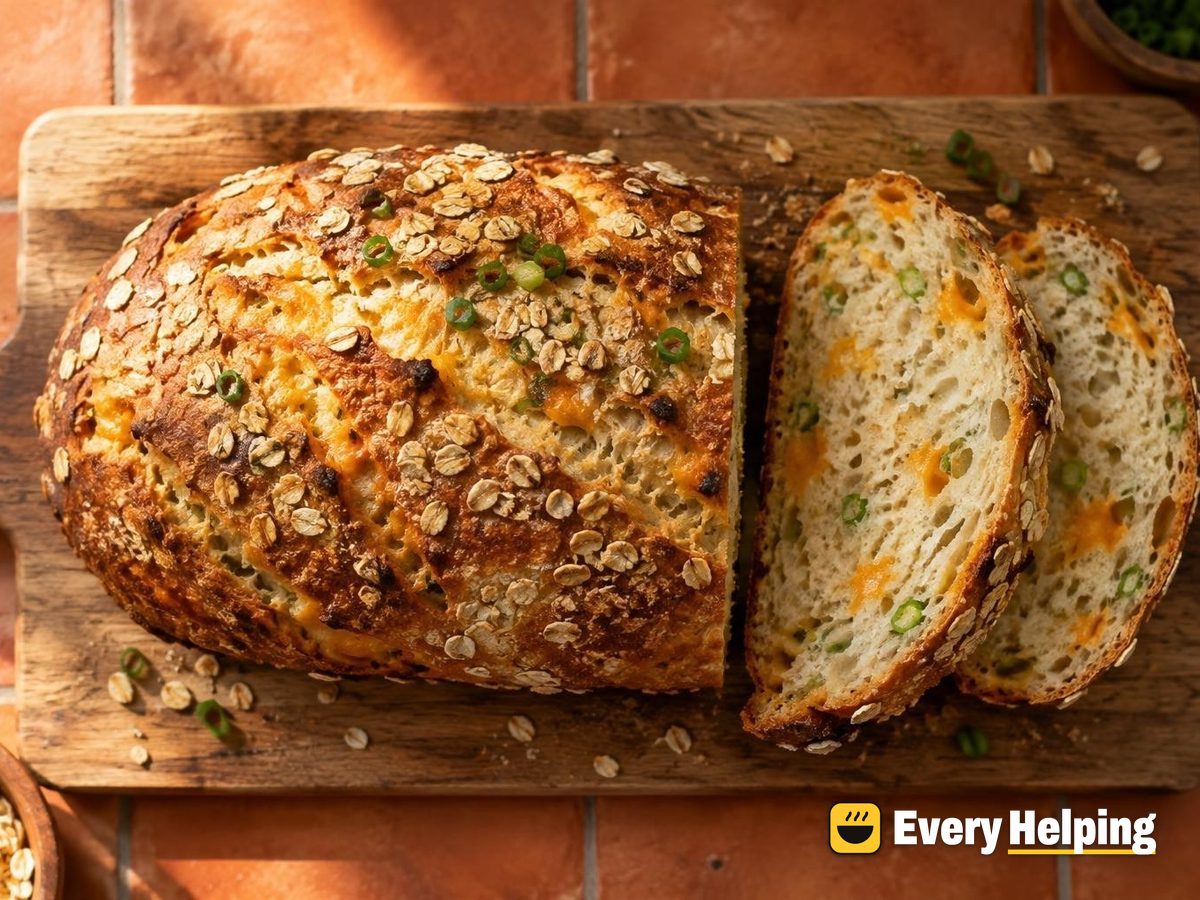
- Dutch oven
- 1 day 1 hr · 50 min hands-on
- Makes 1 loaf (12 slices)
- Vegetarian
- 31–45 g carbs
- Sodium 600 mg or less
- Sat fat 4 g or less
- 500 calories or less
Ingredients
- 3½ cups430 gAll-purpose flour
- 1 cup (240 ml)220 gButtermilk, low-fatat room temperature
- ½ cup110 gWaterlukewarm
- 3½ oz100 gActive sourdough starter (100% hydration)fed and at its peak
- 1⅓ cups110 gOld-fashioned rolled oatsdivided
- ⅔ cup shredded70 gCheddar cheesecut into small cubes
- 2½ medium40 gGreen onionsthinly sliced
- 2½ tbsp35 gOlive oildivided
- 2¼ tsp15 gMaple syrup
- 1½ tsp9 gSalt
Steps
- The night before baking day, about 8 to 12 hours before mixing, feed your starter equal weights of flour and water; at about 75°F (24°C) it should double and peak in 4 to 6 hours. Use it bubbly, at its peak.
- Divide the oats: 90 g for the soaker and 20 g for the topping. Toast the 90 g of oats in a dry skillet over medium heat, stirring, until golden and fragrant, about 5 minutes. Cool 5 minutes, then stir them into the buttermilk and soak 30 minutes.
- In a large bowl, whisk the water, sourdough starter and maple syrup. Add the flour and mix until no dry bits remain. Cover and rest 45 minutes.
- Add the salt, the buttermilk-soaked oats and 20 g of the olive oil (the first portion); squeeze and fold until the dough is smooth and the oil is absorbed. This is about 75% hydration and 2% salt.
- Bulk rise covered at about 75°F (24°C) for 4 to 5 hours. During the first 2 hours, do 4 sets of stretch-and-folds 30 minutes apart; at the second set, stretch the dough thin, scatter the cheddar and green onion over it and fold them in.
- When the dough has risen about 50%, looks domed and jiggles, turn it out, pre-shape it into a loose round and rest 20 minutes. Shape it into a tight batard.
- Brush the top of the batard with 10 g of the olive oil (the second portion), sprinkle on the reserved 20 g of raw oats and press them in. Set it oat side down in a floured, towel-lined banneton or bowl, cover and cold-proof in the fridge 10 to 14 hours.
- Place a lidded Dutch oven in the oven and preheat to 450°F (230°C) for 45 minutes.
- Turn the cold dough out onto parchment, oat side up, score it lengthwise and lower it into the hot Dutch oven. Bake covered 25 minutes.
- Uncover, reduce the oven to 400°F (205°C) and bake 15 to 20 minutes more, until deep golden and the center reads 190°F (88°C) or a bit higher.
- Brush the hot loaf with the remaining 5 g of olive oil (the last portion) and drape loosely with a clean towel for 10 minutes to soften the crust.
- Cool on a rack at least 1 hour before slicing into 12 slices.
Food safety: Don't taste raw dough or batter: raw flour and raw eggs can carry germs.
Contains: Milk, Gluten.
Cook mode Log it in Today Make it mine
Made it
Made it? Share how yours turned out.
You might also like
 Cheddar Walnut Rosemary Seeded Sourdough Boule260 calories · 9 g protein
 Honeyed Oat Porridge Seeded Whole Wheat Boule240 calories · 9 g protein
 Maple Milk Oat-Crusted Seeded Sourdough Boule230 calories · 7 g protein
 Oat Porridge Rosemary Spelt Sourdough Boule230 calories · 9 g protein
Saved in the Every Helping recipe book on October 24, 2026.
Want one that fits your numbers?
Pick the meal, the pan and your targets, and the Every Helping recipe generator writes a recipe with every number worked out. Free on the web.